
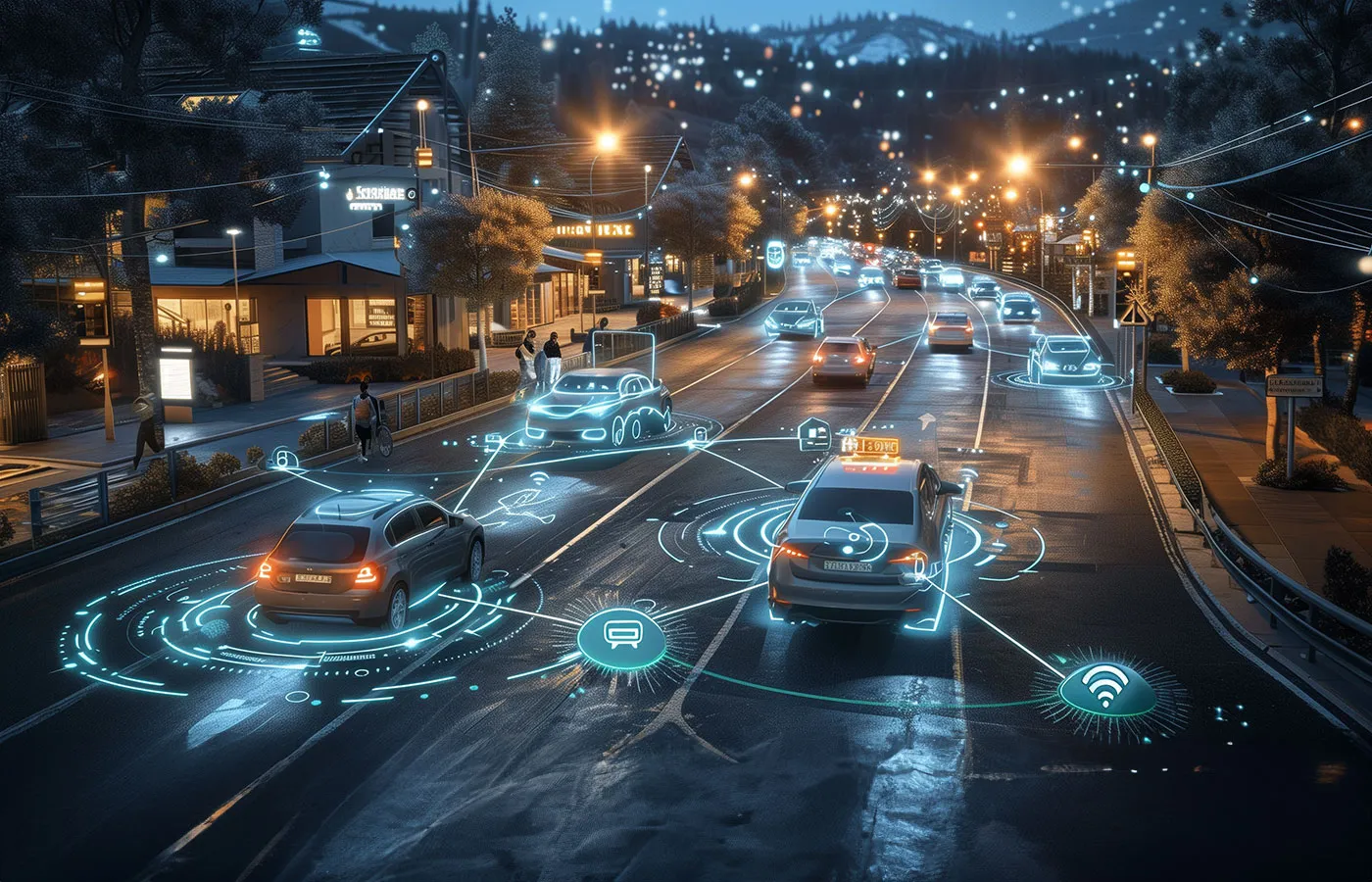
Introduction to Edge AI
Edge AI refers to the deployment of artificial intelligence models directly on edge devices such as smartphones, sensors, cameras, and IoT hardware. Instead of sending data to centralized cloud servers for processing, Edge AI enables computation to happen closer to where the data is generated.
This shift is transforming how modern systems handle data, improving speed, privacy, and reliability across industries.
What Is Edge AI and How It Works
Edge AI combines edge computing with machine learning. AI models are trained either in the cloud or on-premise and then deployed onto edge devices.
Key components include:
-
Edge devices: Cameras, wearables, industrial machines, routers
-
AI models: Optimized neural networks designed for low power and limited hardware
-
Local processing: Data is analyzed in real time without constant cloud interaction
By processing data locally, Edge AI reduces dependence on internet connectivity and centralized infrastructure.
Why Edge AI Matters in Modern Technology
The explosive growth of connected devices has created challenges around latency, bandwidth, and privacy. Edge AI directly addresses these concerns.
Core advantages:
-
Ultra-low latency for real-time decision-making
-
Reduced bandwidth usage, lowering operational costs
-
Enhanced data privacy, as sensitive information stays local
-
Improved reliability in environments with unstable connectivity
These benefits make Edge AI ideal for mission-critical applications.
Real-World Applications of Edge AI
Edge AI is already embedded in many technologies people use daily, often without realizing it.
Common use cases:
-
Smartphones: Face recognition, voice assistants, camera enhancements
-
Healthcare: Patient monitoring devices and diagnostic tools
-
Manufacturing: Predictive maintenance and defect detection
-
Smart cities: Traffic monitoring, surveillance, and energy optimization
-
Retail: Customer behavior analysis and inventory tracking
Each application relies on fast, localized intelligence rather than distant cloud servers.
Edge AI vs Cloud AI
While both approaches have value, they serve different purposes.
Key differences:
-
Edge AI focuses on speed, autonomy, and privacy
-
Cloud AI excels at large-scale training and complex analytics
-
Edge AI models are smaller and optimized
-
Cloud AI models are more resource-intensive
In practice, many organizations use a hybrid approach, combining cloud training with edge deployment.
Challenges and Limitations of Edge AI
Despite its advantages, Edge AI is not without obstacles.
Major challenges include:
-
Limited computing power on edge devices
-
Model optimization complexity
-
Device security risks
-
Maintenance and update management at scale
Ongoing advances in hardware acceleration and AI frameworks are steadily reducing these barriers.
The Future of Edge AI
The future of Edge AI is closely tied to innovations in 5G, AI chips, and federated learning. As hardware becomes more powerful and energy-efficient, edge devices will handle increasingly complex tasks.
Emerging trends:
-
Smarter autonomous systems
-
Wider adoption in industrial automation
-
Greater emphasis on privacy-first AI architectures
Edge AI is expected to become a foundational layer of next-generation digital infrastructure.
Frequently Asked Questions (FAQs)
What industries benefit most from Edge AI?
Industries such as healthcare, manufacturing, automotive, retail, and smart cities gain significant value from Edge AI due to real-time and privacy-focused processing.
Is Edge AI more secure than cloud-based AI?
Edge AI can improve security by keeping sensitive data local, but devices must still be protected against physical and cyber threats.
Does Edge AI replace cloud computing?
No, Edge AI complements cloud computing. Cloud platforms remain essential for training models and large-scale analytics.
What hardware is required for Edge AI?
Edge AI typically uses specialized processors like NPUs, TPUs, GPUs, or optimized CPUs designed for low-power AI workloads.
How are Edge AI models updated?
Models are usually updated remotely through secure over-the-air updates or during scheduled maintenance cycles.
Can small businesses use Edge AI?
Yes, with the availability of affordable edge hardware and open-source AI frameworks, Edge AI is increasingly accessible to smaller organizations.
How does Edge AI support real-time decision-making?
By processing data locally, Edge AI eliminates network delays, allowing systems to react instantly to changing conditions.