
Creating a safe home environment is one of the most important responsibilities for parents and caregivers. Children are naturally curious and often explore their surroundings without understanding potential dangers. Everyday household items—stairs, electrical outlets, cabinets, and furniture—can pose serious risks if proper safety measures are not in place.
Childproofing your home involves identifying potential hazards and implementing preventive solutions to protect infants and toddlers from injuries. This guide explains practical steps, essential tools, and room-by-room safety strategies to help you build a safer living space for your child.
Why Childproofing Your Home Matters
Young children explore their environment by touching, climbing, and tasting objects around them. Unfortunately, this curiosity increases the risk of accidents.
Common household injuries among children include:
- Falls from stairs or furniture
- Burns from hot surfaces or liquids
- Poisoning from cleaning chemicals or medications
- Electrical shocks from exposed outlets
- Choking on small objects
Implementing proper childproofing measures can significantly reduce the risk of accidents and provide parents with peace of mind.
When Should You Start Childproofing?
Many parents wait until their baby starts crawling, but safety preparation should begin earlier.
Ideally, start childproofing when your baby is 4–6 months old, before mobility begins. Once babies learn to crawl or walk, they can reach new areas quickly.
Key milestones that signal the need for safety adjustments include:
- Rolling over
- Crawling
- Pulling up on furniture
- Walking independently
Preparing in advance ensures your home is ready when your child begins exploring.
Essential Childproofing Tools
Several safety products are designed specifically to reduce risks inside homes. These tools are inexpensive and easy to install.
Common Childproofing Products
Safety Gates
- Prevent access to stairs and restricted areas
- Ideal for hallways and kitchen entrances
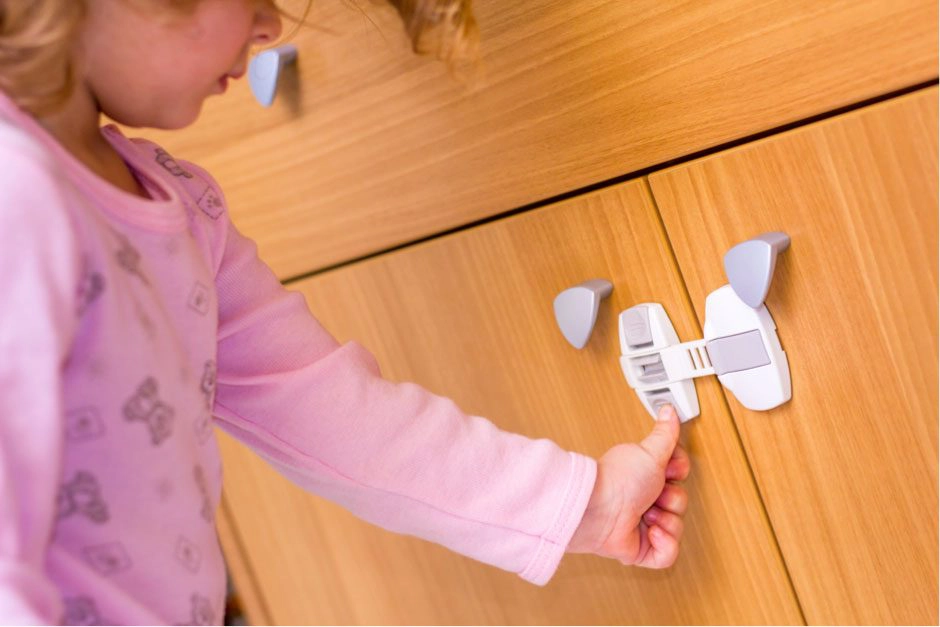
Cabinet Locks
- Keep cleaning chemicals and sharp objects out of reach
- Suitable for kitchens and bathrooms
Outlet Covers
- Protect children from electrical shocks
- Fit into unused electrical sockets
Corner Guards
- Cushion sharp furniture edges
- Reduce injury from falls
Door Knob Covers
- Prevent children from opening unsafe rooms
Using these simple tools helps create multiple layers of protection throughout your home.
Room-by-Room Childproofing Guide
Every room presents unique risks. Addressing safety concerns individually ensures thorough protection.
Living Room Safety
The living room often contains heavy furniture, electronics, and decorative items that may become hazards.
Important safety measures include:
- Secure televisions and bookshelves to the wall
- Install corner guards on tables
- Cover all electrical outlets
- Keep remote controls and small objects out of reach
- Use cord organizers for blind and curtain strings
These adjustments reduce the risk of falling furniture and choking hazards.
Kitchen Safety
Kitchens contain hot surfaces, sharp tools, and potentially toxic substances.
Key precautions include:
- Install cabinet locks on lower cupboards
- Store cleaning chemicals in high cabinets
- Use stove knob covers to prevent accidental ignition
- Keep knives and sharp utensils in locked drawers
- Turn pot handles inward while cooking
Always supervise children closely in the kitchen, especially during cooking.
Bathroom Safety
Bathrooms present risks such as drowning, poisoning, and slipping.
Recommended safety steps:
- Install toilet lid locks
- Use non-slip mats in the bathtub
- Lock cabinets containing medications or chemicals
- Set water heater temperature below 49°C (120°F)
- Keep electrical appliances unplugged
Never leave a child unattended in a bathtub—even for a few seconds.
Bedroom Safety
Children spend a large portion of their time sleeping, so bedroom safety is essential.
Safety practices include:
- Use a firm mattress in the crib
- Avoid pillows, blankets, and stuffed toys for infants
- Anchor dressers and shelves to the wall
- Install outlet covers
- Keep cords and blinds out of reach
Maintaining a clutter-free room also reduces the risk of tripping or choking.
Staircase and Hallway Safety
Stairs are one of the most dangerous areas in a home for young children.
Protect staircases by:
- Installing safety gates at the top and bottom of stairs
- Ensuring railings are secure and properly spaced
- Keeping stairs clear of toys or clutter
- Using non-slip stair treads
Avoid pressure-mounted gates at the top of stairs; wall-mounted gates provide better stability.
Hidden Hazards Parents Often Miss
Some risks are less obvious but equally dangerous.
Common overlooked hazards include:
- Window blind cords that pose strangulation risks
- Button batteries from small electronics
- Heavy furniture that can tip over
- Plastic bags that may cause suffocation
- Unlocked medication bottles
Regularly scan your home from a child’s perspective—crawl around the room to spot potential dangers at their level.
Childproofing Checklist
Use this quick checklist to evaluate your home’s safety.
General Safety
- Anchor heavy furniture
- Install outlet covers
- Keep small objects out of reach
Kitchen
- Cabinet locks installed
- Sharp objects stored safely
- Stove knob covers in place
Bathroom
- Non-slip bath mat installed
- Toilet lid lock installed
- Medicines stored securely
Stairs
- Safety gates installed
- Handrails secured
Performing regular safety checks ensures your childproofing measures remain effective.
Maintaining a Safe Environment as Children Grow
Childproofing is not a one-time task. As children grow, their abilities change, allowing them to reach new areas and objects.
Adjust your safety measures as your child develops by:
- Raising cabinet locks higher
- Updating safety gates
- Teaching basic safety rules
- Monitoring new household hazards
Combining environmental safety measures with supervision and education provides the strongest protection.
Frequently Asked Questions (FAQs)
1. What age should I start childproofing my home?
It is best to begin childproofing before your baby becomes mobile, usually around 4–6 months of age.
2. Are childproofing products really necessary?
Yes. Safety devices such as cabinet locks and outlet covers help reduce the risk of accidents and injuries in the home.
3. What is the most dangerous room for toddlers?
The kitchen and bathroom are typically the most hazardous areas because they contain sharp objects, chemicals, and water hazards.
4. How can I prevent furniture tip-overs?
Anchor heavy furniture such as dressers, bookshelves, and televisions to the wall using anti-tip brackets.
5. Do I need safety gates even if my child cannot walk yet?
Yes. Babies begin crawling quickly, and safety gates prevent access to stairs and restricted areas.
6. How often should I check my childproofing setup?
Review your home every 2–3 months or whenever your child reaches a new developmental milestone.
7. Can childproofing replace parental supervision?
No. Childproofing reduces risk but does not replace active supervision. Adults should always monitor young children closely.